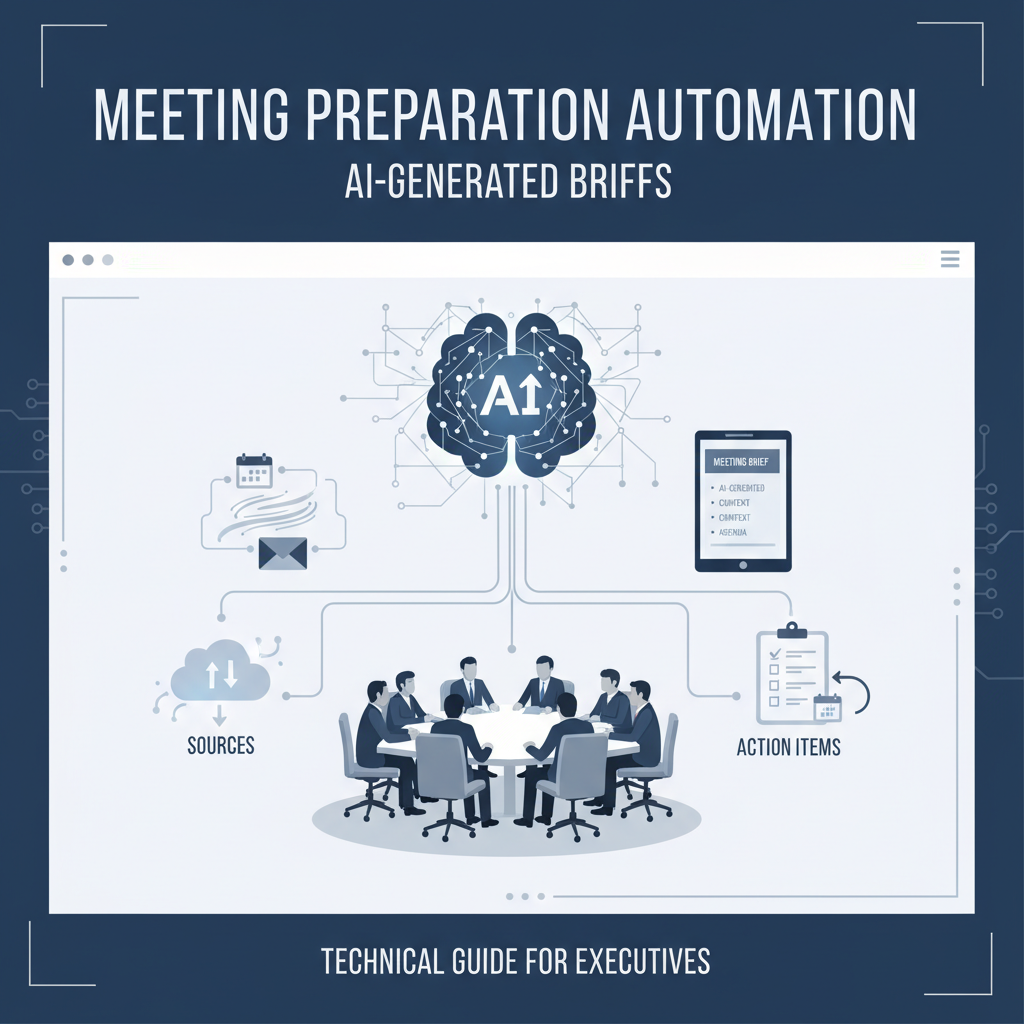
Effective meeting preparation requires gathering context from multiple sources - emails, previous meeting notes, documents, messages - synthesizing that information, and identifying what you need to know. For busy executives with 5-10 meetings daily, this preparation work takes 20-30 minutes per meeting, totaling 2-5 hours daily. This is a key component of how AI assistants save executives time and is included in daily briefs for executives.
AI executive assistants automate this entire process. They gather context from all your platforms, generate comprehensive meeting briefs, and extract action items from previous meetings. Here's how it works and why it matters.
Before every important meeting, you need to understand the context. What was discussed in previous meetings with these attendees? What emails have been exchanged about this topic? What documents are relevant? What decisions are pending? What action items from previous meetings need follow-up?
Gathering this context manually takes 10-15 minutes per meeting. You search through emails, review previous meeting notes, check shared documents, and try to piece together the full picture. Even with good organization, this is time-consuming and it's easy to miss important context.
Creating a meeting brief from this context takes another 5-10 minutes. You need to summarize key points, identify open decisions, highlight risks or concerns, and list action items that need follow-up. This synthesis work requires judgment and time.
For executives with 5-10 meetings daily, this preparation work totals 100-300 minutes daily - nearly 2-5 hours. That's 25-75 hours monthly spent just preparing for meetings. This time could be better spent on strategic work or decision-making.
AI assistants automatically gather context from all your platforms when a meeting is scheduled. They search your emails for conversations with meeting attendees, review previous meeting notes, check shared documents, and analyze recent messages in Slack or Teams. This context gathering happens automatically in the background.
The AI then synthesizes this information into a structured meeting brief. It identifies key discussion points from email threads, extracts decisions and action items from previous meetings, highlights relevant documents, and summarizes recent communications. All of this is organized into a clear, readable brief.
The brief includes context about what's been discussed, open decisions that need to be made, risks or concerns that should be addressed, and action items from previous meetings that need follow-up. It also suggests an agenda based on the context gathered.
This entire process happens automatically. By the time you're ready to prepare for a meeting, the brief is already waiting for you. You review it, make any adjustments, and you're prepared. What used to take 20-30 minutes now takes 5-10 minutes of review.
The value of automated brief generation comes from gathering context from multiple sources simultaneously. Instead of manually searching through emails, documents, and messages, AI does this automatically and synthesizes everything into one coherent brief.
Email threads with meeting attendees are analyzed to understand what's been discussed. Previous meeting notes are reviewed to identify decisions made and action items assigned. Shared documents are checked for relevant information. Recent Slack or Teams messages are analyzed for context.
This multi-source context gathering ensures you have the complete picture before meetings. You're not walking into meetings with partial information - you have full context from all relevant sources, synthesized into an actionable brief.
The AI also learns which sources are most relevant for different types of meetings. For client meetings, it might prioritize email threads and previous meeting notes. For team meetings, it might prioritize Slack messages and shared documents. This learning makes briefs more relevant over time.
One of the most valuable aspects of automated meeting preparation is tracking action items from previous meetings. When you have a recurring meeting series or meetings with the same attendees, AI tracks what action items were assigned, their status, and whether they need follow-up.
Before each meeting, the brief includes a section on previous action items. You can see what was committed to, whether it's been completed, and what needs to be discussed. This ensures follow-through and accountability.
The AI also identifies new action items during meetings (if the meeting is transcribed) and tracks them going forward. This creates a complete action item lifecycle - assigned in meetings, tracked over time, and reviewed in subsequent meetings.
This action item tracking prevents the common problem of commitments made in meetings but never followed up on. Everything is tracked automatically, and you're reminded of outstanding action items before relevant meetings.
A good meeting brief provides structure without being overwhelming. It should include key context points, open decisions that need to be made, risks or concerns to address, previous action items and their status, and a suggested agenda.
The brief should be scannable - you should be able to quickly understand what you need to know without reading through everything. Important information should be highlighted, and the brief should be organized logically.
AI-generated briefs follow this structure automatically. They're consistent across all meetings, making it easy to quickly understand any meeting's context. The structure becomes familiar, reducing the cognitive load of processing meeting information.
For executives with 5-10 meetings daily, automated brief generation saves 15-25 minutes per meeting. That's 75-250 minutes daily, or 25-75 hours monthly. This time can be redirected to strategic work, decision-making, or simply having more time for important priorities.
But the time savings are only part of the value. Better preparation leads to better meetings. When you have full context, you can make better decisions, ask more relevant questions, and contribute more effectively. Meetings become more productive, not just faster to prepare for.
The consistency of preparation is also valuable. Every meeting gets the same level of preparation, regardless of how busy you are. You're never walking into meetings unprepared because preparation happens automatically.
The quality of AI-generated briefs depends on the context available and the AI's ability to synthesize it. Good AI assistants gather comprehensive context, synthesize it intelligently, and present it clearly. They learn your preferences over time to make briefs more useful.
Accuracy is important - briefs should reflect what's actually been discussed, not what the AI thinks might be relevant. Good assistants cite sources, show where information came from, and allow you to verify context easily.
You should always review briefs before important meetings. AI provides a great starting point, but your judgment is still needed to ensure the brief is complete and accurate. The goal is to reduce preparation time, not eliminate your involvement entirely.
Meeting briefs become more valuable when integrated with other meeting workflows. When a meeting is scheduled, the brief is automatically generated and attached to the calendar event. When the meeting ends, action items are automatically extracted and tracked.
This integration creates a complete meeting lifecycle. Preparation happens automatically when meetings are scheduled. Documentation happens automatically when meetings end. Action items are automatically tracked and followed up on.
The integration also works with your daily brief. Meeting briefs are included in your morning daily brief, so you can review all your meetings for the day in one place. This makes daily preparation more efficient.
When evaluating AI assistants for meeting preparation, look for solutions that gather context from multiple sources automatically. The assistant should check emails, documents, previous meeting notes, and messages without manual input from you.
Ensure the assistant synthesizes information intelligently, not just aggregates it. A good brief is more than a collection of information - it's a synthesized understanding of what you need to know. The AI should identify key points, extract important information, and organize it clearly.
Verify that the assistant tracks action items across meetings. It should remember what was committed to in previous meetings, track completion status, and remind you of outstanding items. This action item tracking is critical for meeting effectiveness.
Finally, confirm that briefs are accurate and useful. The assistant should cite sources, show where information came from, and allow you to verify context. Briefs should save you time while ensuring you have the information you need.
If you spend significant time preparing for meetings, automated brief generation can help. Start by connecting your email, calendar, and messaging tools. The AI will begin generating briefs automatically for your scheduled meetings.
Review the briefs for the first few meetings and provide feedback when information is missing or incorrect. The AI learns from your feedback and improves brief quality over time. Soon, you'll have comprehensive, accurate briefs for every meeting automatically.
The goal is to eliminate the manual work of meeting preparation while ensuring you're always well-prepared. Good meeting preparation makes you more effective in meetings without requiring hours of preparation time.
Alyna automatically generates meeting briefs by gathering context from emails, documents, previous meetings, and messages. Get comprehensive preparation in minutes, not hours, and save 20-30 minutes per meeting.