Executive work involves significant phone time - client calls, team meetings, investor updates, vendor negotiations. The problem? Important information, action items, and decisions discussed in calls often get lost. You might remember the big picture, but specific commitments, deadlines, and follow-ups fade from memory.
AI voice assistants solve this by automatically transcribing calls, extracting key information, and creating actionable follow-ups. Here's how it works and why it matters for busy executives.
Most executives spend 2-4 hours daily on phone calls. During these calls, important information is discussed: decisions are made, action items are assigned, deadlines are set, and commitments are made. Without documentation, this information exists only in memory, which is unreliable.
The manual alternative - taking notes during calls - is distracting and incomplete. You can't fully engage in the conversation while writing everything down. You miss details, action items get forgotten, and follow-ups never happen. The result is broken commitments and lost opportunities.
Even when calls are recorded, transcription is time-consuming. A 30-minute call takes 15-20 minutes to transcribe manually, and extracting action items requires another 10-15 minutes of review. For 10 calls per week, that's 4-6 hours of transcription and review work.
AI voice assistants automate this entire process. They transcribe calls in real-time or from recordings, extract key information automatically, identify action items, and create follow-up tasks. All of this happens automatically, saving hours weekly while ensuring nothing gets lost.
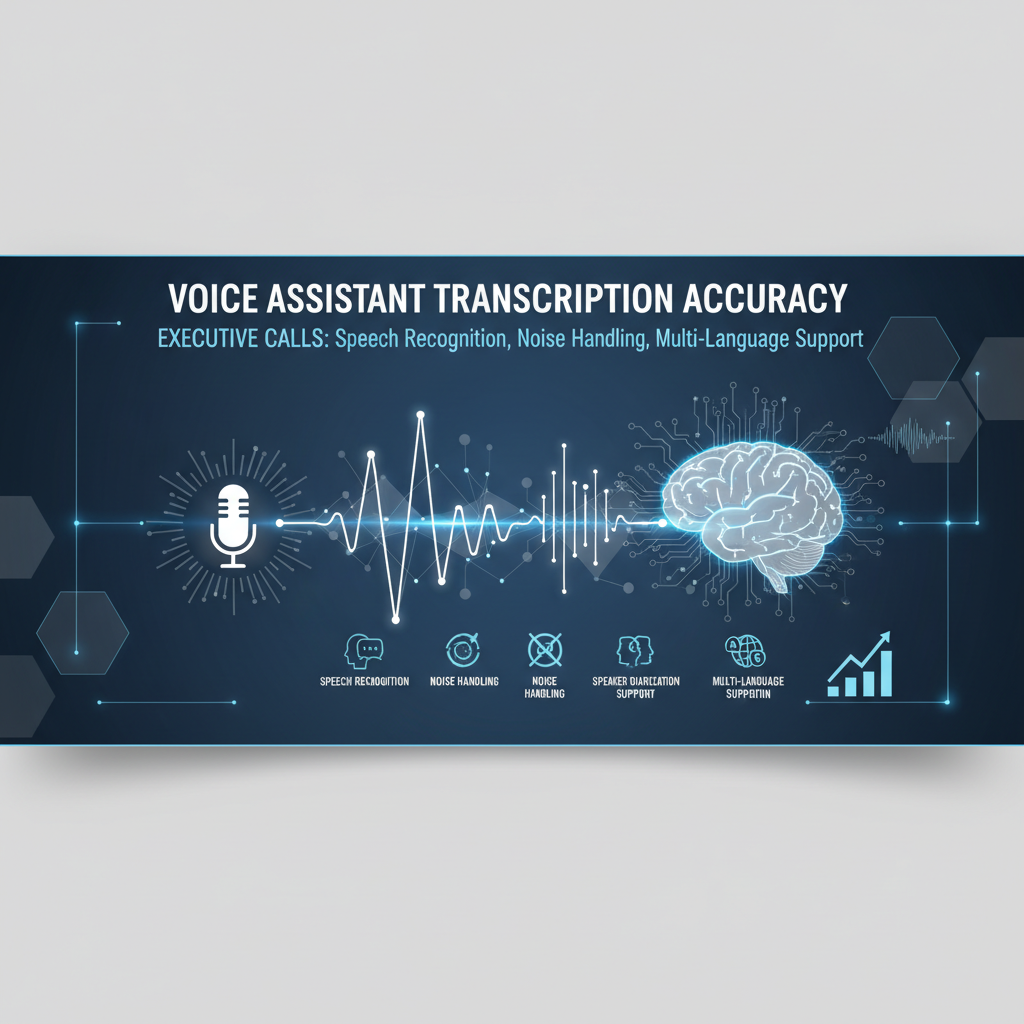
AI voice assistants use advanced speech recognition to transcribe calls accurately, even in challenging conditions. Background noise from office environments, multiple speakers on conference calls, accents from international participants, and technical terminology are all handled automatically.
The transcription happens in real-time during calls or from recordings after calls end. Real-time transcription lets you see what's being said as the conversation happens, which is helpful for taking notes or catching details you might have missed. Post-call transcription from recordings ensures you have a complete record even if you weren't paying full attention during the call.
The accuracy is high - typically 95-98% for general speech, even higher for clear audio conditions. For executives, this accuracy is sufficient to capture all important information, decisions, and action items. The transcript becomes a searchable record of everything discussed.
Beyond transcription, AI extracts actionable information from calls automatically. It identifies action items ("John will send the proposal by Friday"), decisions made ("We decided to move forward with Project X"), deadlines mentioned ("The contract needs to be signed by next week"), and commitments ("I'll follow up with the client tomorrow").
These extracted items are then converted into tasks automatically. Action items become tasks in your task manager with owners and due dates. Decisions are logged for future reference. Deadlines are added to your calendar. Commitments are tracked to ensure follow-up happens.
This extraction happens automatically as the call is transcribed. By the time the call ends, you have a complete transcript, a list of action items, and tasks created automatically. You review and approve, then everything is tracked and followed up on automatically.
You have a 45-minute call with a key client discussing a new project. During the call, you discuss project scope, agree on a timeline, assign action items to both parties, and set a follow-up meeting. Without documentation, you'd need to remember all of this and manually create tasks and calendar events.
With AI voice assistance, the entire call is transcribed automatically. AI extracts the project scope, timeline commitments, action items for both you and the client, and the follow-up meeting request. It creates tasks for your action items, drafts a follow-up email summarizing the discussion, and proposes the follow-up meeting time.
You review the transcript, action items, and follow-up email in your approval queue. You approve everything, and AI sends the follow-up email, creates the tasks, and schedules the meeting. The entire documentation and follow-up workflow is handled automatically.
Time Saved: 20-30 minutes per call. For 10 client calls monthly, that's 3.5-5 hours saved, plus nothing gets forgotten.
You have a weekly team meeting where you discuss project status, make decisions, and assign action items. Without documentation, team members have different recollections of what was decided, action items get lost, and follow-ups don't happen consistently.
With AI voice assistance, the meeting is transcribed automatically. AI extracts all decisions made, action items assigned, and follow-ups needed. It creates a meeting summary, assigns tasks to responsible team members, and drafts a follow-up email to the team.
You review and approve, then AI sends the summary email, creates all tasks, and ensures everyone knows what they're responsible for. The meeting documentation is complete, consistent, and actionable.
Time Saved: 15-20 minutes per meeting. For weekly team meetings, that's 1-1.5 hours monthly, plus better follow-through on action items.
You have monthly calls with investors to provide updates. These calls cover financial performance, strategic initiatives, and upcoming milestones. Without documentation, you need to manually prepare updates and remember what you committed to in previous calls.
With AI voice assistance, all investor calls are transcribed and stored. AI can reference previous call transcripts when preparing for new calls, ensuring consistency in your updates. It extracts commitments you made and ensures you follow through on them.
When preparing for the next investor call, AI can summarize what was discussed in previous calls, highlight commitments made, and suggest topics to cover based on what's been discussed before. This ensures continuity and follow-through across calls.
Time Saved: 30-45 minutes per call cycle (preparation + documentation). For monthly investor calls, that's 6-9 hours annually, plus better investor relations through consistent follow-through.
Voice transcription accuracy is critical for executive use. AI assistants achieve 95-98% accuracy for general speech, which is sufficient to capture all important information. For technical terminology or industry-specific terms, accuracy can be improved by adding custom vocabulary.
The AI learns your communication patterns over time. It learns the names of people you talk to frequently, the terminology you use, and the context of your conversations. This learning improves accuracy over time, making transcripts more useful.
Even with high accuracy, it's important to review transcripts for critical calls. AI provides confidence scores for transcript segments, flagging low-confidence sections for your review. This ensures important information isn't missed due to transcription errors.
For executives working with global teams, multi-language support is important. AI assistants can transcribe calls in multiple languages, automatically detecting the language being spoken and transcribing accordingly. This makes international calls as easy to document as domestic ones.
The AI can also translate transcripts if needed. If you have a call in a language you're not fluent in, AI can transcribe in the original language and provide a translation. This makes international communication more accessible.
Language detection happens automatically, so you don't need to specify which language is being spoken. The AI detects language changes during calls and handles them appropriately, making multilingual calls easy to document.
Voice transcription becomes more valuable when integrated with other workflows. When a call ends, the transcript doesn't just sit in a file - it triggers follow-up workflows automatically. Action items become tasks, decisions are logged, and follow-up emails are drafted.
This integration creates complete workflows from calls. A client call doesn't just get transcribed - it generates meeting notes, creates action items, drafts follow-up emails, and schedules next steps. The entire post-call workflow is automated.
The integration also works in reverse. When preparing for a call, AI can reference previous call transcripts, email threads, and calendar events to provide context. This ensures you're prepared with full context for every call.
Voice transcription involves sensitive conversations, so privacy and security are critical. AI assistants should use enterprise-grade security, encrypt transcripts at rest and in transit, and never share your conversations with third parties.
You should have control over transcription. You should be able to enable or disable transcription for specific calls, delete transcripts when needed, and control who has access to transcripts. This ensures your privacy while getting the benefits of transcription.
Compliance is also important. Transcripts may contain regulated information, so the assistant should comply with relevant regulations (GDPR, HIPAA, etc.) and provide audit trails of transcript access and usage.
When evaluating AI voice assistants, look for solutions with high transcription accuracy (95%+), especially in noisy conditions. The assistant should handle multiple speakers, background noise, and technical terminology accurately.
Ensure the assistant extracts actionable information, not just transcribes. It should identify action items, decisions, deadlines, and commitments automatically. This extraction is what makes transcription valuable, not just the transcript itself.
Verify that the assistant integrates with your other tools. Transcripts should trigger follow-up workflows, create tasks, draft emails, and schedule meetings automatically. This integration makes voice assistance part of your complete workflow, not a separate tool.
Finally, confirm privacy and security. Transcripts should be encrypted, access should be controlled, and compliance should be maintained. Your conversations are sensitive, and they should be protected accordingly.
If you spend significant time on calls and struggle with documentation and follow-up, AI voice assistance can help. Start by enabling call transcription for your phone system or using the assistant's voice call features.
As you use transcription, review the accuracy and provide feedback when corrections are needed. The AI learns from your corrections and improves over time. Soon, you'll have accurate transcripts and automatic action item extraction for all your calls.
The goal is to eliminate the manual work of call documentation while ensuring nothing discussed in calls gets lost. Good voice assistance makes you more efficient without making you less engaged in conversations.
Alyna transcribes your calls with 95%+ accuracy, extracts action items automatically, and creates follow-up workflows. Never lose information from calls again, and save 15-30 minutes per call on documentation and follow-up.