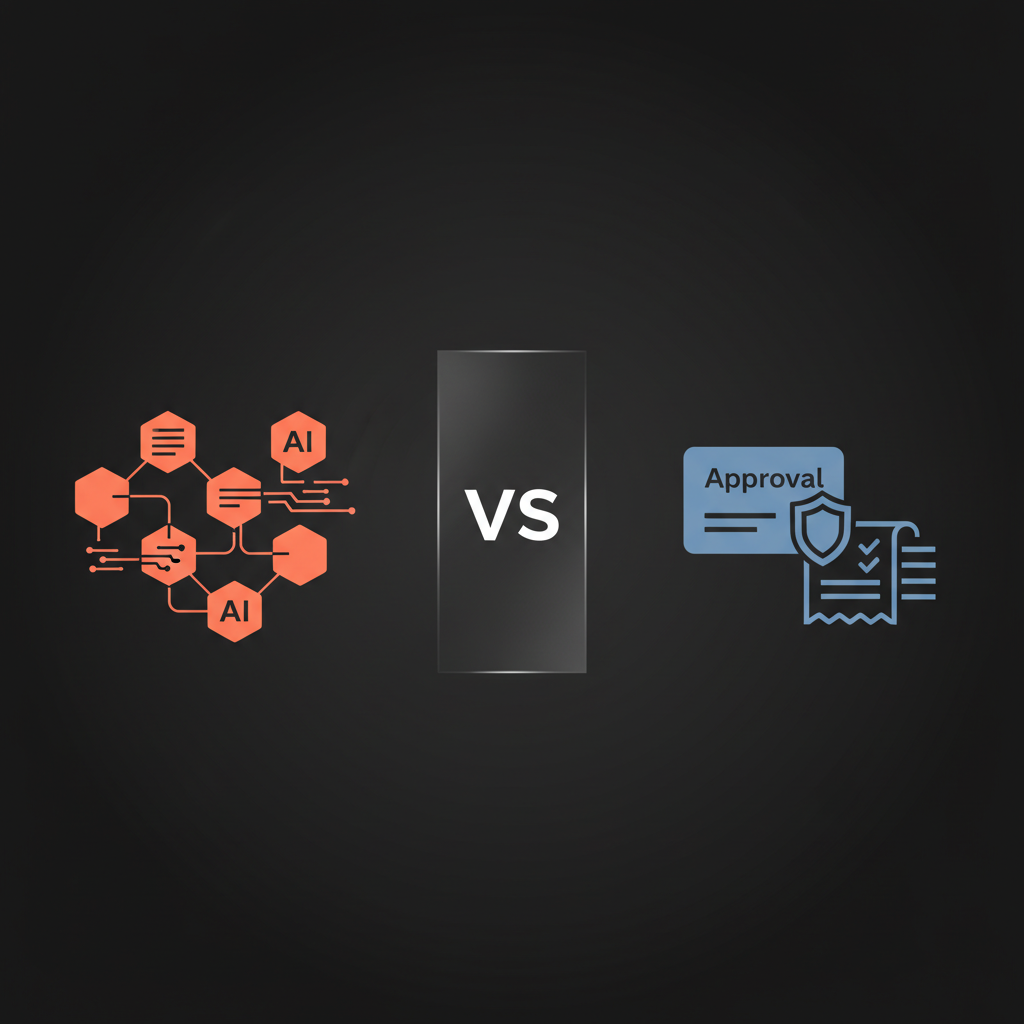
If you are evaluating OpenClaw and want the fastest honest answer, it is this: choose OpenClaw if you want self-hosted flexibility and are comfortable owning the security hardening yourself; choose Alyna if you want an AI executive assistant that can actually do work without making you the full-time operator. For executive use, the real decision is not "which tool is more impressive?" It is which one gives you useful automation with the least accidental blast radius.
OpenClaw is the current name of the project previously known as Clawdbot and Moltbot. In its rename announcement, the project said it had crossed 100,000 GitHub stars and 2 million visitors in a single week, which explains why so many buyers are suddenly researching it as an AI assistant option. Source
This guide is for executives, founders, and senior operators who are not just browsing hype. You are trying to answer a practical question: what is the best OpenClaw alternative if you want safer delegation, approvals, and accountability by default?
| Decision area | Alyna | OpenClaw |
|---|
| Best fit | Executives and teams who want delegation with approvals and auditability | Technical users who want local-first, self-hosted control |
| Default operating model | Draft first, approve, then execute | Powerful tooling, but operator-configured |
| Who handles hardening | Managed platform with guardrails | You |
| Web and browser tasks | Built for real workflows with approval gates | Possible, but higher setup and risk burden |
| Accountability | Built-in receipts and audit trail | Logs and controls depend on your deployment |
| Bottom line | Better OpenClaw alternative for executive work | Better for tinkerers and self-hosting enthusiasts |
If you want the current-name comparison page, see Alyna vs OpenClaw. If you want the deeper risk analysis on the ecosystem and naming churn, see Moltbot, Clawdbot, OpenClaw: real pain points and safer checklist.
OpenClaw describes itself as an open agent platform that runs on your machine and works from chat apps you already use, including WhatsApp, Telegram, Discord, Slack, and Teams. The project explicitly positions itself around local ownership: your machine, your keys, your rules. Source
That pitch is legitimately compelling. A lot of people have wanted exactly this category for years:
- an assistant that lives where they already communicate,
- can trigger real actions instead of just chatting,
- and can be self-hosted rather than fully vendor-managed.
For technical users, that is the appeal. For executives, though, the important follow-up question is different:
What happens when the assistant is wrong, over-permissioned, or pointed at sensitive systems?
OpenClaw's own security guidance is refreshingly direct about the trust model. It assumes a personal assistant deployment, warns against using one shared gateway for mutually untrusted users, and recommends one trusted operator boundary per gateway. It also tells operators to start with the smallest access that still works and widen permissions later. Source
That honesty is a good sign. It is also the reason many executives realize they may not actually want to be the operator.
When a self-hosted assistant can touch email, browse sites, run actions, or store local state, the safety question becomes operational:
- Who manages credentials?
- Who scopes permissions?
- Who prevents over-broad tool access?
- Who notices if a control surface is exposed?
Axios summarized the risk clearly during Moltbot's rise: once users connect messaging, files, browser access, and calendar permissions, the assistant can end up with very broad system access, and exposed or misconfigured control panels become a real problem. Source
OpenClaw's documentation includes a hardened baseline, security audit commands, gateway-auth guidance, and repeated warnings about trust boundaries. That is good security work. But from a buyer perspective, it means the product assumes a user who will actually read, configure, and maintain those controls. Source
Executives usually do not want an assistant that becomes a small internal security project.
The hardest workflows are the ones people actually care about:
- handling inbox triage,
- proposing calendar moves,
- researching vendors,
- logging into admin portals,
- booking travel,
- filling forms,
- coordinating across Slack, Teams, and email.
Those workflows are valuable precisely because they touch real systems. That is why the right alternative to OpenClaw is not just "another assistant." It is one designed around controlled execution.
Alyna is not trying to win the "most hackable local agent" contest. It is built for a different buyer:
the executive who wants meaningful delegation without silent actions, hidden failures, or DIY hardening work.
The core model is simple:
- Alyna drafts or proposes the action.
- You review it.
- You approve it.
- Only then does it execute.
That sounds small, but it changes the category. It turns the assistant from "potentially dangerous autonomy" into "useful leverage with a human checkpoint." For the broader philosophy, see approval workflows for executives.
Executives do not just need the action done. They need to know:
- what the assistant planned to do,
- what was approved,
- what actually happened,
- and whether the outcome matched the request.
That is why Alyna is a better fit when accountability matters across scheduling, email, coordination, and browser tasks.
OpenClaw's open-platform model is attractive if you want to wire together your own local-first setup. Alyna's advantage is that it is built around the everyday reality of executive delegation:
- Slack, Teams, email, and calendar workflows,
- browser tasks that need approvals,
- briefing and follow-up flows,
- coordination instead of raw agent experimentation.
This is why the best OpenClaw alternative for executives is not the one with the most knobs. It is the one that gives the executive the fewest ways to get surprised.
- you strongly prefer self-hosting,
- you want full code-level control,
- you are comfortable operating within the project's stated trust model,
- you do not mind managing hardening, auth, plugins, network exposure, and ongoing maintenance.
- you want approval-first delegation by default,
- you want a clear audit trail for meaningful actions,
- you need browser and workflow automation without becoming the operator,
- you care more about reliable executive workflows than about local-agent experimentation.
When comparing OpenClaw and Alyna, ask one question before you compare feature bullets:
If the assistant touches something sensitive and gets it wrong, who owns the blast radius?
With OpenClaw, the answer is mostly the operator. That is not inherently bad. It is just the real trade-off.
With Alyna, the product philosophy is that the assistant should be powerful, but the dangerous parts should be bounded by approvals, scoped access, and receipts.
That single distinction matters more than almost every feature-list argument.
Yes. OpenClaw is the current name of the project that previously used the Clawdbot and Moltbot names. The rename announcement explains that the team moved through multiple names before settling on OpenClaw. Source
Alyna is the strongest fit when the buyer cares about approval-first execution, auditability, and executive-safe delegation rather than self-hosting flexibility. OpenClaw can make sense for technical operators, but many executives do not want to own the hardening and operational burden.
Choose OpenClaw if you want local-first control and are comfortable running the security and maintenance model yourself. Choose Alyna if you want the assistant outcome without taking on the full operator role.
Treat Clawdbot, Moltbot, and OpenClaw as the same project family. If you are comparing current options, start with Alyna vs OpenClaw. If you are researching the legacy-name ecosystem and risks, read our Clawdbot alternative guide and pain-points guide.
OpenClaw is a real product category signal: buyers clearly want assistants that live in chat, take actions, and feel personal. But for executive workflows, the best OpenClaw alternative is the one that keeps the leverage while reducing the chance of an expensive mistake.
That is Alyna's position in one sentence:
Alyna gives executives the upside of an agentic assistant without forcing them to become the security engineer, reliability engineer, and operator behind it.
If that is what you want, start with Alyna vs OpenClaw, or get access to Alyna.