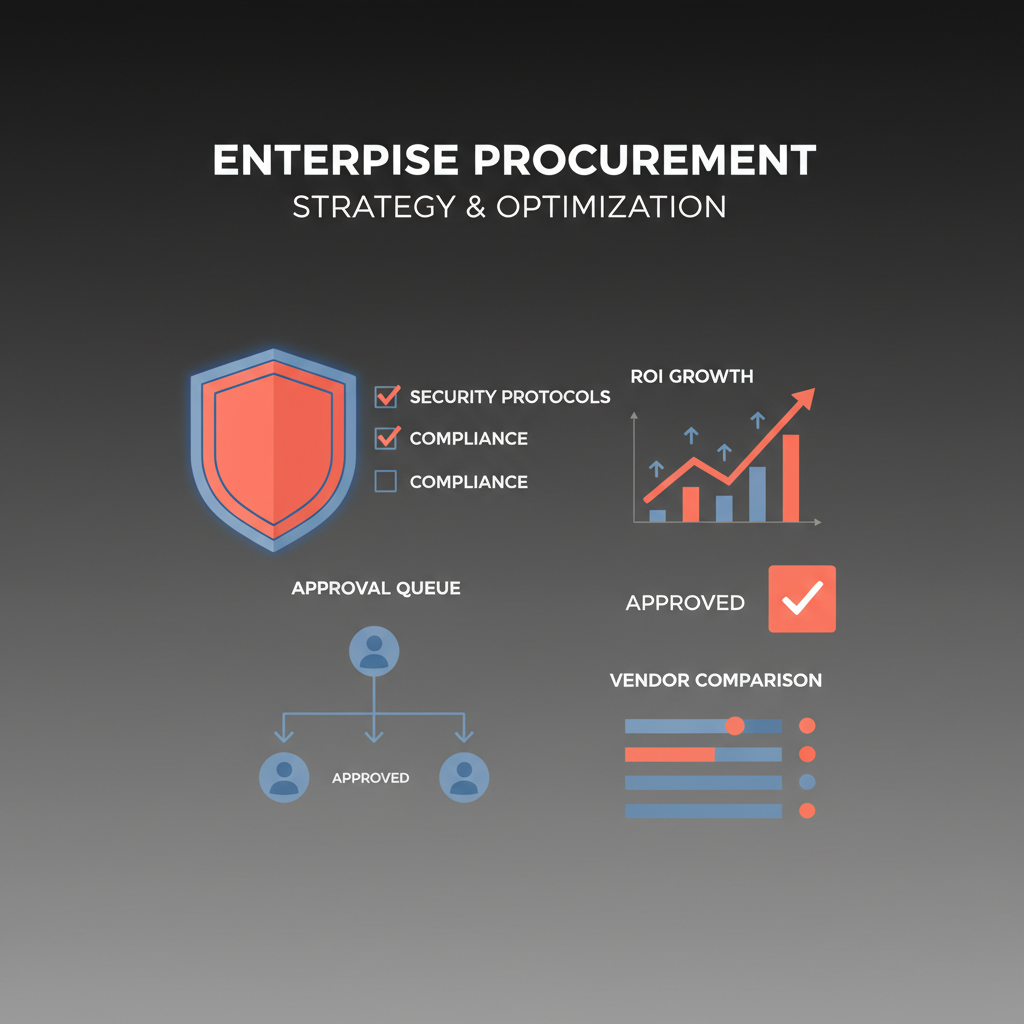
The right way to evaluate an AI executive assistant vendor is not to ask who has the flashiest demo. It is to ask whether the product can operate inside executive workflows with bounded autonomy, visible approvals, clean identity controls, and measurable time-to-value. That distinction matters because executive assistants do not just generate text. They touch calendars, inboxes, meeting prep, follow-ups, and often external communication. NIST's Generative AI Profile, OpenAI's guidance on governing agentic AI systems, and Anthropic's guidance on building effective agents all point in the same direction: serious buyers should care about governance, legibility, and workflow fit as much as model capability. If you are comparing tools now, start with this checklist, not the sales deck.
If you want the category context first, see AI Chief of Staff, AI Executive Assistant, and our market overview of the best AI executive assistants in 2026. If your buying committee is already deep in risk review, pair this page with our guide to approval workflows for executives and security and compliance for AI executive assistants.
An AI executive assistant sits unusually close to commitments, priorities, and high-context communication. It may summarize inbound mail, propose calendar changes, draft follow-ups, gather research, or tee up actions for approval. That means the real buying question is not "Is the model smart?" It is "Can this system prepare useful work without creating hidden operational risk?"
That is why generic prompt quality is not enough. Anthropic distinguishes between predictable workflows and open-ended agents, and recommends starting with the simplest design that works. OpenAI emphasizes constrained action spaces, approval requirements, and legibility for agentic systems. Microsoft's 2025 Work Trend Index shows why buyers are pushing into this category in the first place: 82% of leaders say this is a pivotal year to rethink strategy and operations, while 82% expect to use digital labor to expand workforce capacity. But that same urgency is what causes sloppy vendor selection.
For executive buyers, a good vendor should prove five things:
| Evaluation pillar | What you need to prove | Why it matters |
|---|
| Identity and access | The tool can be controlled through enterprise auth and role boundaries | Assistants become a live access surface the moment they connect to email and calendars |
| Approval and oversight | The product can draft and recommend without silently acting | Executive workflows need reviewable, interruptible automation |
| Operational fit | The product solves real executive coordination work, not just general chat | You are buying workflow leverage, not another interface |
| Admin readiness | IT and security can provision, monitor, and revoke access cleanly | A promising pilot still fails in procurement if admin controls are thin |
| ROI proof | The vendor can define measurable time-to-value and review burden | If value stays anecdotal, rollout stalls after the pilot |
Use the table below in demos, RFPs, InfoSec review, and final business-case discussions. A strong vendor should answer directly, provide evidence, and show the capability live where possible.
| # | Buyer question | What a strong answer looks like | Red flag |
|---|
| Identity and access | | | |
| 1 | Does the product support enterprise SSO using SAML or OIDC? | The vendor supports standard enterprise SSO and documents the setup clearly | Login is email-password only or "SSO is on the roadmap" |
| 2 | Can access be granted by group or role, not only user by user? | Provisioning aligns to teams, business units, or exec offices rather than manual invite lists | Admins have to manage every user individually |
| 3 | Does the platform support automated provisioning and deprovisioning, ideally via SCIM? | The vendor can tie lifecycle changes to the identity provider, which aligns with Okta's SCIM model, Microsoft Entra provisioning guidance, and the base SCIM protocol standard | Offboarding depends on manual tickets or vendor support |
| 4 | Are admin roles separated from end-user roles and reviewer roles? | The platform distinguishes IT admin, executive, delegate reviewer, and possibly workspace owner | One broad super-admin role controls everything |
| 5 | Can the enterprise enforce MFA and conditional access through the identity layer? | The assistant inherits the organization's access policies rather than bypassing them | The product cannot participate cleanly in the company's identity controls |
| Approval and oversight | | | |
| 6 | Can the assistant draft, summarize, and prepare actions without sending automatically? | Draft-first is the default and outbound actions can be held for review | The tool optimizes for silent or one-click autonomous sending |
| 7 | Can approval requirements vary by workflow, user, or action type? | Different rules exist for low-risk drafts, scheduling, external communications, and sensitive stakeholders | Approval is all-or-nothing with no policy nuance |
| 8 | Can sensitive people, topics, or channels be escalated automatically? | The system can hold investor, legal, HR, finance, or board-related items for human review | No escalation logic beyond "trust the model" |
| 9 | Is every recommendation and action legible after the fact? | You can see what was proposed, when, by whom, with what review outcome, which aligns with OpenAI's governance guidance on legibility and interruptibility |
Do not treat the 25 questions as a casual note-taking aid. Turn them into a weighted scorecard and require written evidence for each answer.
One practical weighting model for executive buyers:
| Scorecard area | Weight | Why it deserves that weight |
|---|
| Identity and access | 25% | If IT cannot govern the product, the deal usually stops here |
| Approval and oversight | 25% | Approval-first design is the difference between leverage and risk |
| Workflow fit | 20% | A secure product that does not reduce coordination load will not survive adoption |
| Admin readiness | 15% | Provisioning, logging, and offboarding determine whether rollout is sustainable |
| ROI proof | 15% | Value must be demonstrated with a real pilot, not only positioning |
Use a simple scoring rule:
5 = live capability shown with evidence3 = capability exists but was described, not demonstrated1 = partial, immature, or roadmap-only0 = not supported
That structure helps avoid a common buying error: letting a strong demo outweigh weak control surfaces. McKinsey has shown that AI adoption is broad but scaling remains rare. In procurement terms, that means many vendors can impress a pilot team, but fewer can survive enterprise review and produce repeatable value after rollout.
You should slow down, narrow scope, or walk away if you see any of the following:
- The vendor cannot explain exactly when the assistant drafts, recommends, escalates, or acts.
- Security answers immediately jump to SOC 2 while skipping approval controls, admin roles, or offboarding.
- There is no clear distinction between end-user settings and enterprise-wide policy controls.
- The vendor's value case assumes 100% automation instead of a realistic review process.
- The pilot plan is broad, vague, and designed to maximize excitement rather than produce evidence.
Serious buyers should also challenge "agent" language aggressively. Anthropic is explicit that workflows are better for predictable, bounded tasks, while agents make sense when the work is open-ended and harder to predefine. For executive assistants, that usually means the winning product is not the one promising maximum autonomy. It is the one with the cleanest boundaries.
Before contracting, you do not need a full business transformation model. You need a believable path to proof. A vendor should be able to tell you:
- which 2-4 workflows are best for a first pilot
- who will review outputs and how often
- what a healthy approval rate looks like by day 30
- what metrics will prove value without hiding review burden
- what "no-go" looks like if the product does not perform
That buyer discipline matters because OpenAI's 2025 enterprise report found that the biggest value signal comes from repeatable workflow use, not casual experimentation, while Microsoft keeps pointing to the same underlying pressure: people are overloaded, but leadership still expects measurable productivity gains. Procurement should translate that pressure into a controlled proof, not a leap of faith.
This checklist-driven approach is the right fit when the product will touch sensitive executive workflows and multiple stakeholders have to sign off. It is the wrong fit if:
- you are evaluating a lightweight personal assistant for one individual with no enterprise controls requirement
- your organization has not yet agreed on whether the assistant may only draft or may also act
- no one owns review, security, and pilot measurement on the buyer side
- the problem is actually broader workflow redesign, not vendor selection
In those cases, the better next step may be internal operating design first, then procurement. Buyers often try to use the vendor process to answer internal policy questions that should have been decided before the demo.
Usually two or three. More than that creates meeting volume without improving decision quality, and fewer than that makes commercial leverage weaker.
No. For executive buyers, model quality matters, but only inside a governed system. A slightly weaker model with stronger approval controls, better admin tooling, and cleaner workflow fit is often the better purchase.
For most serious buyers, yes. A short, bounded pilot is the best way to validate review burden, workflow fit, and early ROI before broader rollout.