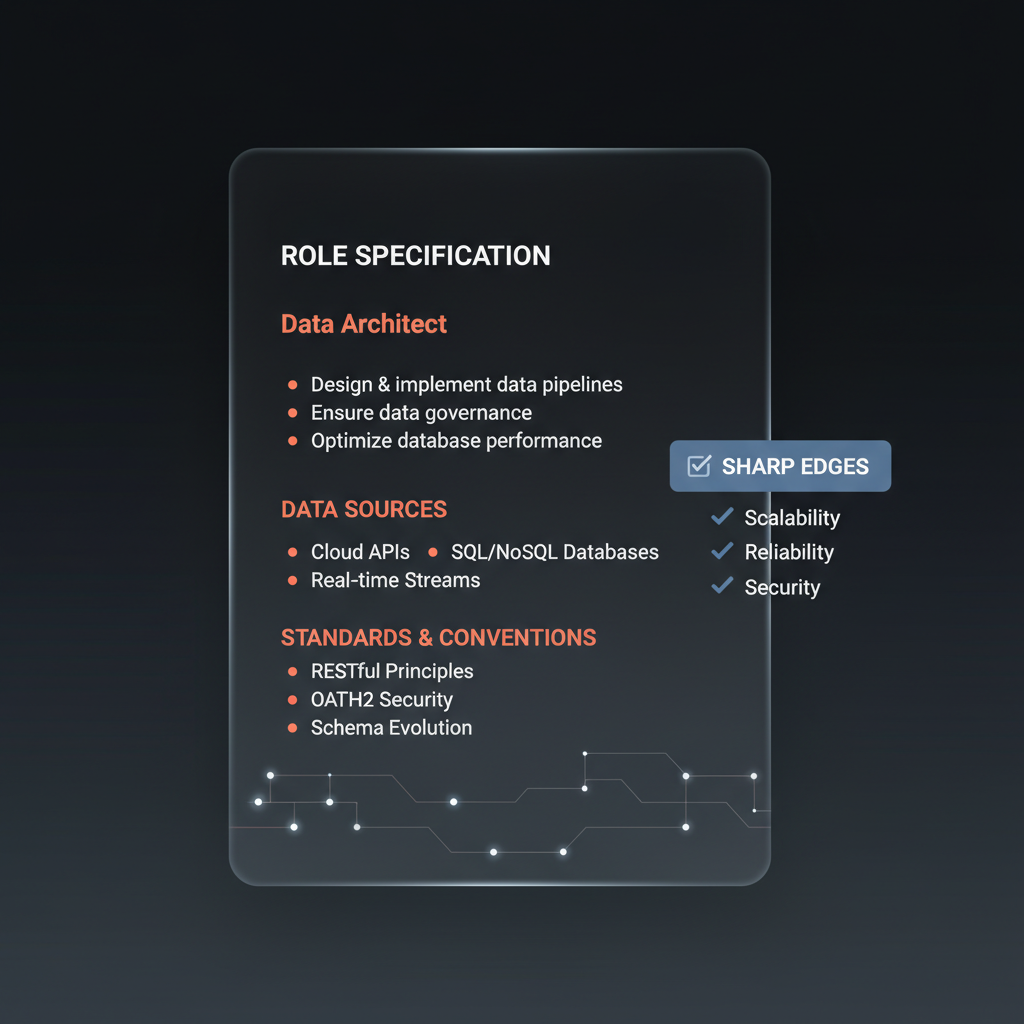
Your AI assistant sometimes "forgets," gives inconsistent answers, or guesses wrong - e.g. pulling "MR" from Stripe when you meant ChartMogul, or inventing who attended which session. The cause usually isn't the model; it's missing or scattered instructions: no single source of truth for role, data sources, definitions, and conventions. Fix that with a clear "job description" and sharp edges - and the assistant will deliver consistently.
With Alyna, you store that job description (and procedures) in one place; Alyna reads it every time and follows it - with a full audit trail so you can see what it did and why. This post shows how to write instructions so Alyna actually delivers and doesn't forget or guess wrong.
This post is for executives, operators, and anyone who uses an AI chief of staff and wants reliable, repeatable behavior.
Context is huge and instructions are often scattered across chats, docs, and one-off messages. The assistant doesn't have a single place that says:
- Who it works for and where to pull data
- What key terms mean (e.g. "MR" = this metric, from this source)
- How to structure outputs (IDs, naming, schema)
- What to do in recurring situations (e.g. SOD/EOD check)
So it infers - and sometimes infers wrong. "MR" might come from Stripe in one run and ChartMogul in another; "who attended session 3" might be invented because there's no convention for session IDs and attendees. The fix is one source of truth and sharp edges: explicit definitions and procedures the assistant reads every time.
Think of it as the doc you'd give a new hire: role, reporting, tools, definitions, structure, and principles. With Alyna you put this in memory or a connected doc so Alyna reads it every time.
- "You are [role]. You report to [person]. You work with [list of tools/systems]."
So Alyna knows who it's working for and what it's allowed to use.
- "For [metric/concept], use [exact definition and source]. Example: MR = monthly recurring revenue from ChartMogul, not Stripe. Session = calendar event with tag [X]; session ID = [format]."
No more "it used the wrong MR" or "it made up attendees." You've defined the terms and the source.
- "When updating [artifact - e.g. dashboard, report], use structure [schema]. Use IDs: [person ID], [team ID], [session ID] so we can relate records. Never invent IDs or attendees; only use what you read from [sources]."
So outputs are consistent and joinable - and the assistant doesn't hallucinate structure.
- "Never store secrets in plain text. Never send [list of action types] without approval. Prefer [format]. If unclear, ask."
Principles guard against bad behavior and clarify how to behave at the edges.
For recurring tasks, give Alyna a procedure it can follow every time:
- "SOD/EOD check: read [channel] between [times], list who posted, tag [person] and anyone who hasn't. Run at [time]."
Store procedures in a retrievable form (e.g. markdown in a doc Alyna can read) so Alyna doesn't rely on long chat context. With Alyna's memory, you can also add: "Remember: when [situation], do [X]. When [other situation], escalate to [person]."
- Baseline file - Create one doc (or Alyna memory entry) with: role, reporting, tools, definitions, structure, IDs, principles. Point Alyna at it: "Before every run, read [this doc] and follow it."
- Procedures - Add procedures for recurring tasks (SOD/EOD, weekly update, new client setup) in the same doc or a linked one. Alyna runs them consistently.
- Refine with feedback - When Alyna gets something wrong, update the job description: add the missing definition or convention. Next run, Alyna follows the updated instructions. Alyna's approval-first workflow means you see proposed actions before they're applied - so you can correct and then update the doc.
The result: fewer "it forgot" moments, fewer wrong assumptions, and consistent behavior - with an audit trail so you can verify what Alyna did and why.
- One source of truth - Role, sources, definitions, structure, and procedures in one place. Alyna reads it every time.
- Sharp edges - No more "MR from Stripe vs ChartMogul" or invented session attendees. You define; Alyna follows.
- Retrievable procedures - Recurring tasks (checks, updates, setups) are documented and followed the same way every time.
- Audit trail - You can see what Alyna proposed and what was approved - so you can fix the job description when something goes wrong and trust that the next run will use the fix.
Writing your AI assistant's job description isn't a one-time prompt - it's a living doc that you refine as you use Alyna. With Alyna, that doc is the difference between "it sometimes forgets" and "it actually delivers."
Alyna is an AI executive assistant that benefits from clear instructions: one source of truth, sharp edges, and procedures - with full audit trail. See how Alyna works.