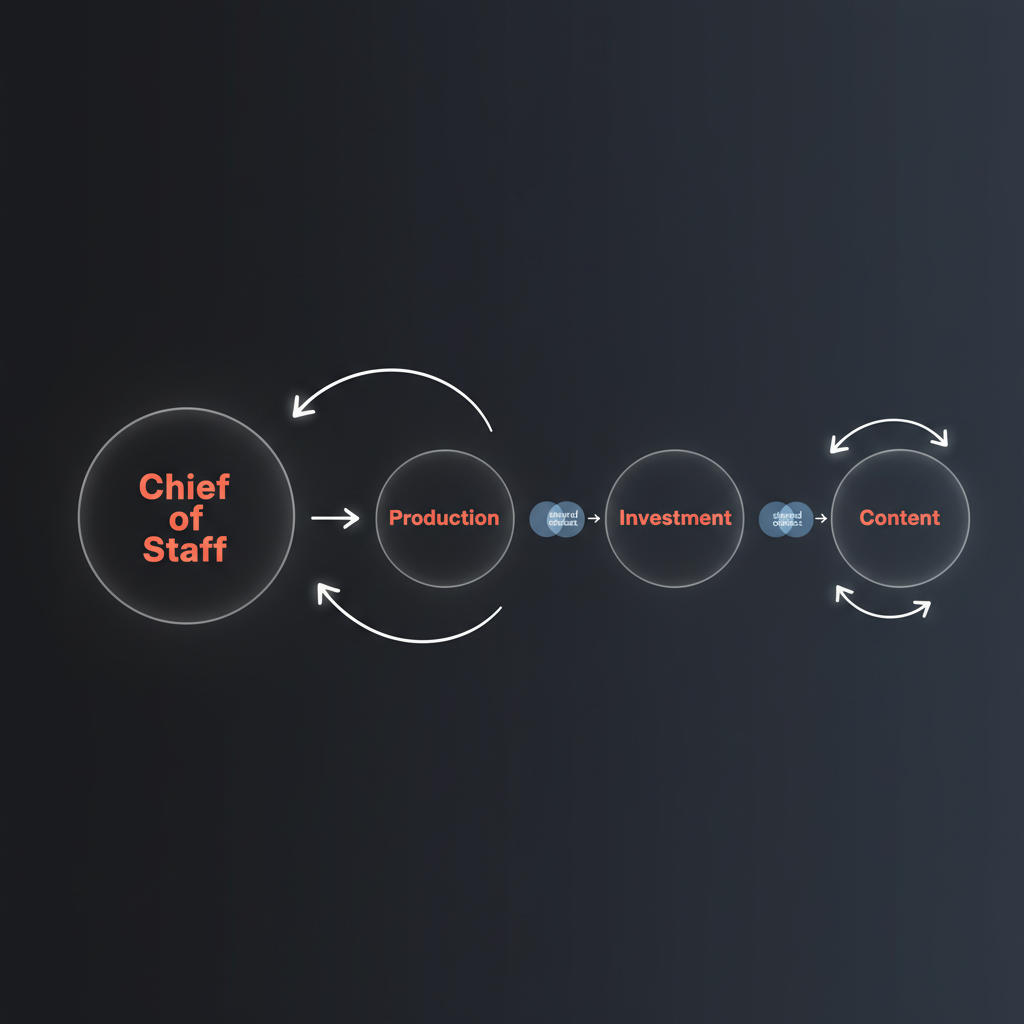
Should you run one AI assistant that does "everything" (100 - 200 skills) or several specialists - e.g. one for production, one for investment, one for content? Each choice has trade-offs: one agent can become a bottleneck and a single point of confusion; many agents can create silos and duplicate context. The right answer depends on how you work - and you want an assistant that supports both so you're not locked in.
With Alyna, you can run one chief of staff that handles many domains (one memory, one audit trail) or multiple focused workflows. Alyna's approval and audit model works either way; you get consistent security and control whether you choose one or many. This post is a decision framework and shows how to use Alyna either way.
Pros: One place for instructions, one memory, one audit trail. Simpler ops: you're not syncing multiple agents or wondering "which one had that context?" Good when your work is interconnected - e.g. the same person does BD, research, and content - and you want one assistant that can do meeting prep, research, and outreach in the same conversation.
Cons: One agent with too many jobs can get confused or slow; prompts and skills can become a long list that's hard to maintain. You may need to be disciplined about "job description" and scope (see How to Write Your AI Assistant's Job Description) so the single assistant stays consistent.
Use Alyna as one chief of staff when you want simplicity and a single source of truth. Give Alyna one baseline doc (role, sources, definitions, procedures); Alyna handles many domains with one memory and one approval workflow.
Pros: Domain expertise per agent (e.g. "production" vs "investment"), parallel work without one bottleneck, and clearer separation of duties. Good when different teams or workflows have different data and different conventions - e.g. one workflow for delivery, one for deal flow.
Cons: Silos: "replicant 1 learned X, replicant 2 doesn't know it." You need a way to share learnings and conventions so the outputs can connect (e.g. same person ID, same definitions). Without that, you get duplicate context and inconsistent behavior.
Use Alyna in multiple workflows when you have distinct domains and want parallel execution. Share context via a shared location: "After completing [task type], write a short summary of what you did and what you learned; store in [shared doc/location]. Include: what worked, what failed, what to try next time." Use the same conventions (IDs, definitions) across workflows so Alyna (or multiple Alyna-backed flows) can reference the same people, projects, and terms. Alyna's approval and audit model works per workflow - you get consistency and control in each.
- Shared conventions - One source of truth for IDs, definitions, and "where data lives." All workflows read from it so "person ID" and "MR" mean the same thing everywhere.
- Learnings - "After completing [task type], write a short summary; store in [shared location]. Include: what worked, what failed, what to try next time." So the next run (or another workflow) can use it.
- Escalation - Define who each workflow escalates to (e.g. same person or same channel) so you don't have to check five different inboxes.
Alyna supports both: one Alyna = simpler ops, one memory; many workflows = domain expertise, parallel work - with consistent approval-first and audit either way.
- Decision framework - When one assistant fits (interconnected work, one memory) vs when many fit (distinct domains, parallel work).
- Shared context - How to share conventions and learnings so many workflows don't become silos.
- Use Alyna either way - One chief of staff or multiple focused workflows; Alyna's design supports both with the same security and control.
One AI assistant or many isn't a one-time choice - you can start with one and split later, or run many and consolidate where it helps. With Alyna you can do either and keep approval and audit consistent.
Alyna works as a single chief of staff or as part of multiple specialist workflows - with the same approval and audit. See how Alyna works.